Publication Schedule

Publication Frequency and Schedule

Jurnal Pendidikan Anak (JPA) | PGPAUD Universitas Negeri Yogyakarta

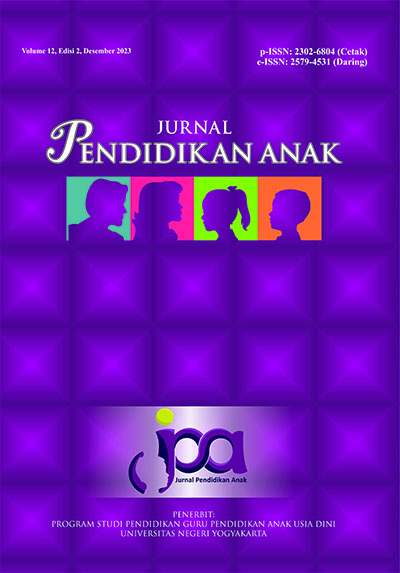
Jurnal Pendidikan Anak (JPA) (p-ISSN: 2302-6804, e-ISSN: 2579-4531) is a peer-reviewed academic journal published by the Department of Early Childhood Teacher Education (PGPAUD), Faculty of Education and Psychology, Universitas Negeri Yogyakarta in collaboration with the Perkumpulan Pengelola Jurnal PAUD Indonesia (PPJ PAUD)[cite: 1, 9, 84].

Continuous Publication Model (Twice a Year Volume)

JPA publishes two issues per volume annually[cite: 88]:

  • Issue 1 (January – June): Closes formally at the end of June.
  • Issue 2 (July – December): Closes formally at the end of December.

Year-Round Submission & Monthly Article Releases

Authors are welcome to submit manuscripts at any time throughout the entire year (all year round). JPA applies an agile, rolling publication policy: articles do not need to wait until the formal closing month of an issue to be published online. As soon as an article successfully completes peer review, revisions, editorial copyediting, proofreading, and DOI assignment, it is immediately published online in that ongoing month under the open issue[cite: 13, 39].

Issue 1 (Period: January – June)

  • Submissions: Accepted anytime (Open 24/7)
  • Review Cycle: Rolling evaluation upon arrival
  • Publishing Window: Monthly as articles become ready

Issue 2 (Period: July – December)

  • Submissions: Accepted anytime (Open 24/7)
  • Review Cycle: Rolling evaluation upon arrival
  • Publishing Window: Monthly as articles become ready

Estimated Editorial Turnaround Time:

Initial Desk Decision: 1 – 2 Weeks
Peer-Review Process: 4 – 8 Weeks
Acceptance to Publication: 2 – 4 Weeks

Publication Punctuality & Transparency (COPE Best Practice)

Each published article visibly displays its complete publication history (Received Date, Revised Date, Accepted Date, and Published Date) in accordance with the Principles of Transparency. Early monthly publication accelerates dissemination and citation impact without compromising peer review integrity[cite: 39].