Sensitivity Analysis of 1D Convolutional Neural Network (CNN) Model for Noise and Artifact Effects in ECG-Based Arrhythmia Detection

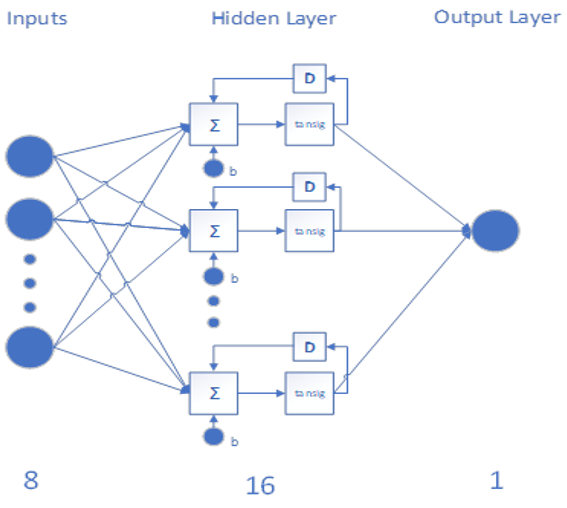
This study evaluates a one-dimensional convolutional neural network (1D CNN) for five-class ECG heartbeat classification using a MIT-BIH-derived dataset and examines the limitations of the available evidence for noise robustness. The reported model combines convolution, flattening, batch normalization, dense layers, dropout, and a softmax output. Reanalysis of the original confusion matrix for 21,892 test beats gives 96.97% accuracy, macro sensitivity of 0.9028, macro specificity of 0.9856, macro-F1 of 0.8676, and weighted F1 of 0.9709. Supraventricular and fusion beats show lower F1-scores of 0.7094 and 0.7324, respectively. Normal beats represent 82.76% of the test set and account for most false-positive supraventricular and fusion predictions. These results demonstrate the importance of classwise metrics under substantial imbalance. Controlled noise-injection and SNR-sweep results are not yet available; therefore, the current classification results do not establish robustness to noise or artifacts. A clearly identified prospective protocol specifies artifact types, multiple SNR levels, and matched-model comparisons needed to complete that objective. The architecture is treated as a conventional baseline, and patient-independent generalization and clinical readiness remain unverified.
Downloads
[1] M. Van Bilsen et al., “The Autonomic Nervous System as a Therapeutic Target in Heart Failure: A Scientific Position Statement from the Translational Research Committee of the Heart Failure Association of The European Society of Cardiology,” European Journal of Heart Failure, vol. 19, no. 11, pp. 1361–1378, Nov. 2017, doi: 10.1002/ejhf.921.
[2] L. Gaztañaga, F. E. Marchlinski, and B. P. Betensky, “Mechanisms of cardiac arrhythmias,” Revista Española de Cardiología (English Edition), vol. 65, no. 2, pp. 174–185, 2012.
[3] A. Abdelrazik et al., “Wearable devices for arrhythmia detection: advancements and clini-cal implications,” Sensors, vol. 25, no. 9, p. 2848, 2025.
[4] K. Yu et al., “Accurate wavelet thresholding method for ECG signals,” Computers in Biolo-gy and Medicine, vol. 169, p. 107835, 2024.
[5] M. Wu, Y. Lu, W. Yang, and S. Y. Wong, “A study on arrhythmia via ECG signal classifica-tion using the convolutional neural network,” Frontiers in computational neuroscience, vol. 14, p. 564015, 2021.
[6] C. Xie, “Biomedical signal processing: An ecg application,” in Leveraging Data Science for Global Health, Springer, 2020, pp. 285–303.
[7] C.-Y. Chen et al., “Automated ECG classification based on 1D deep learning network,” Methods, vol. 202, pp. 127–135, 2022.
[8] M. Kachuee, S. Fazeli, and M. Sarrafzadeh, “ECG Heartbeat Classification: A Deep Transfera-ble Representation,” 2018, arXiv:1805.00794. https://arxiv.org/abs/1805.00794.
[9] R. F. Arifin and S. Mandala, “Study of arrhythmia classification algorithms on electrocardi-ogram using deep learning,” Sinkron: jurnal dan penelitian teknik informatika, vol. 7, no. 3, pp. 1753–1760, 2023.
[10] U. R. Acharya et al., “A deep convolutional neural network model to classify heartbeats,” Computers in biology and medicine, vol. 89, pp. 389–396, 2017.
[11] S. Mousavi, F. Afghah, and U. R. Acharya, “Inter- and intra-patient ECG heartbeat classifica-tion for arrhythmia detection: a sequence to sequence deep learning approach,” 2018, arXiv:1812.07421. https://arxiv.org/abs/1812.07421.
[12] N. Berrahou, A. El Alami, A. Mesbah, R. El Alami, and A. Berrahou, “Arrhythmia detection in inter-patient ECG signals using entropy rate features and RR intervals with CNN archi-tecture,” Computer Methods in Biomechanics and Biomedical Engineering, vol. 29, no. 1, pp. 103–122, 2026.
[13] G. B. Moody and R. G. Mark, “The impact of the MIT-BIH arrhythmia database,” IEEE engineering in medicine and biology magazine, vol. 20, no. 3, pp. 45–50, 2001.
[14] M. A. ALI, S. ALI, and A. KHORSHEED, “ECG signal denoising using discrete wavelet transform,” Journal of Duhok University, vol. 26, no. 2, pp. 450–463, 2023.
[15] K. Yu et al., “Accurate wavelet thresholding method for ECG signals,” Computers in Biolo-gy and Medicine, vol. 169, p. 107835, 2024.
[16] M. J. P. Priyadarsini et al., “Advanced subsystems based ECG signal classification and processing using deep neural networks and wavelets: an evolution of digital health rec-ords,” in AIP Conference Proceedings, AIP Publishing LLC, 2024, p. 030010.
[17] G. Wang et al., “Convolutional Neural Network-Based ECG Signal Classification Model: A Study on Addressing Class Imbalance and Enhancing Model Interpretability,” 2024.
[18] T. Balaji, N. Jaya, and G. V. H. Prasad, “Ecg signal analysis using convolution neural net-works to avoid uncertainty in classification,” Journal of Uncertain Systems, vol. 16, no. 01, p. 2242007, 2023.
[19] A. Mondal, M. S. Manikandan, and R. B. Pachori, “Fast CNN-based electrocardiogram sig-nal quality assessment using Fourier magnitude spectrum for resource-constrained ECG di-agnosis devices,” IEEE Sensors Letters, vol. 8, no. 4, pp. 1–4, 2024.
[20] A. V. Morozov, V. L. Levkivskyi, and D. D. Plechystyy, “Activation functions in neural networks: Overview and comparison,” Scientific Notes of VI Vernadsky Taurida National University. Series: Technical Sciences, vol. 35, no. 74, 2024.
[21] G. B. Moody, W. E. Muldrow, and R. G. Mark, “A noise stress test for arrhythmia detectors,” Computers in Cardiology, vol. 11, pp. 381–384, 1984. Database: https://physionet.org/content/nstdb/1.0.0/.
[22] Y. Ye et al., “Hybrid CNN-BLSTM architecture for classification and detection of arrhythmia in ECG signals,” Scientific Reports, vol. 15, article 34510, 2025. doi:10.1038/s41598-025-17671-1.
Copyright (c) 2026 Jurnal Edukasi Elektro

This work is licensed under a Creative Commons Attribution-ShareAlike 4.0 International License.
The Authors submitting a manuscript do so on the understanding that if accepted for publication, copyright publishing of the article shall be assigned to Journal.