Immersive Technology-Based Adaptive Learning to Improve Academic Achievement and Interpersonal Skills in Electrical Engineering Education
Downloads
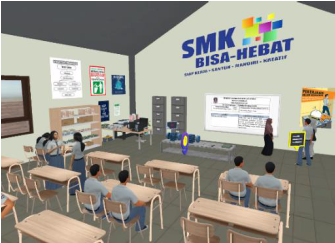
The Development of digital technology creates significant opportunities to improve the learning experience in the engineering education sector. This study investigates and analyses the impact of Augmented Reality as an immersive learning technology to improve academic achievement and interpersonal skills (collaboration and communication). A quasi-experimental design was used to compare the influence of AR-based learning with conventional learning systems in two classes of 60 students. Pre-test and post-test results showed significant improvement in the experimental class, with paired t-tests showing mean differences of -31.20 (t = -20.75, p < 0.001) and -18.76 (t = -13.67, p < 0.001) for the control class. A greater improvement in collaboration and communication skills was observed in the experimental class compared to the control class. The t-test independently revealed significant differences in collaboration skills (t = 4.92, p < 0.000) and communication skills (t = 2.71, p < 0.000). AR provides a more interactive learning experience, improving teamwork and effective communication. These results demonstrate that AR has significant potential in enhancing academic capabilities and 21st-century skills in engineering education.
Downloads
[1] R. Hairani, “Fortadikbud Beri Catatan Pendidikan di Indonesia,” Radio Repubublik Indonesia. [Online]. Available: https://www.rri.co.id/iptek/527215/fortadikbud-beri-catatan-pendidikan-di-indonesia
[2] L. Starkey et al., “Each discipline is different: teacher capabilities for future-focussed digitally infused undergraduate programmes,” Educ. Technol. Res. Dev., vol. 71, no. 1, pp. 117–136, Feb. 2023, doi: 10.1007/s11423-023-10196-2.
[3] M. Masterson, “An Exploration of the Potential Role of Digital Technologies for Promoting Learning in Foreign Language Classrooms: Lessons for a Pandemic,” Int. J. Emerg. Technol. Learn., vol. 15, no. 14, p. 83, Jul. 2020, doi: 10.3991/ijet.v15i14.13297.
[4] A. R. Hamzah et al., Strategi Pembelajaran Abad 21. 2023.
[5] World Economic Forum, “The future of jobs report 2020 | world economic forum,” Futur. Jobs Rep., no. October, p. 1163, 2022, [Online]. Available: https://www.weforum.org/reports/the-future-of-jobs-report-2020/digest
[6] D. B. de Campos, L. M. M. de Resende, and A. B. Fagundes, “The Importance of Soft Skills for the Engineering,” Creat. Educ., vol. 11, no. 08, pp. 1504–1520, 2020, doi: 10.4236/ce.2020.118109.
[7] M. D. Koretsky and A. J. Magana, “Using technology to enhance learning and engagement in engineering,” Adv. Eng. Educ., vol. 7, no. 2, pp. 1–53, 2019.
[8] “Digital Cultural Industry’s Innovative Development Research,” Media Commun. Res., vol. 4, no. 5, 2023, doi: 10.23977/mediacr.2023.040506.
[9] H. Nguyen, L. Wu, C. Fischer, G. Washington, and M. Warschauer, “Increasing success in college: Examining the impact of a project‐based introductory engineering course,” J. Eng. Educ., vol. 109, no. 3, pp. 384–401, Jul. 2020, doi: 10.1002/jee.20319.
[10] H. Nakamura and Y. Mizuno, “Development of Augmented-Reality-Based Magnetic Field Visualization System as an Educational Tool,” Sensors, vol. 22, no. 20, p. 8026, Oct. 2022, doi: 10.3390/s22208026.
[11] H.-Y. Chang et al., “Ten years of augmented reality in education: A meta-analysis of (quasi-) experimental studies to investigate the impact,” Comput. Educ., vol. 191, p. 104641, Dec. 2022, doi: 10.1016/j.compedu.2022.104641.
[12] N. Miner, A. Karabulut‐Ilgu, C. Jahren, and A. Alipour, “Advancing Civil Engineering Education: Implications of Using Augmented Reality in Teaching Structural Analysis,” Comput. Appl. Eng. Educ., vol. 33, no. 4, Jul. 2025, doi: 10.1002/cae.70059.
[13] K. Takrouri, E. Causton, and B. Simpson, “AR Technologies in Engineering Education: Applications, Potential, and Limitations,” Digital, vol. 2, no. 2, pp. 171–190, May 2022, doi: 10.3390/digital2020011.
[14] H. Faridi, N. Tuli, A. Mantri, G. Singh, and S. Gargrish, “A framework utilizing augmented reality to improve critical thinking ability and learning gain of the students in Physics,” Comput. Appl. Eng. Educ., vol. 29, no. 1, pp. 258–273, Jan. 2021, doi: 10.1002/cae.22342.
[15] L. Mursyida et al., “Enhancing Teachers’ Proficiency in Implementing Augmented Reality Technology as Interactive Learning Media,” CONSEN Indones. J. Community Serv. Engagem., vol. 3, no. 2, pp. 70–77, Nov. 2023, doi: 10.57152/consen.v3i2.944.
[16] J. Wang, “Exploring the Digital Innovation Development Model of Intangible Cultural Heritage in China,” Appl. Math. Nonlinear Sci., vol. 9, no. 1, Jan. 2024, doi: 10.2478/amns-2024-0609.
[17] M. Yue, G. Wang, and Z. Li, “The Digital Protection and Inheritance of Intangible Cultural Heritage,” Highlights Art Des., vol. 1, no. 3, pp. 83–87, Dec. 2022, doi: 10.54097/hiaad.v1i3.3220.
[18] A. Hadyaoui and L. Cheniti‐Belcadhi, “Exploring the effects of gender in skills acquisition in collaborative learning based on the ontological clustering model,” J. Comput. Assist. Learn., vol. 40, no. 6, pp. 2484–2495, Dec. 2024, doi: 10.1111/jcal.12852.
[19] V. T. T. Nguyen, H. Chen, and V. T. K. Nguyen, “Integrating Social–Emotional Learning Into Gamified Flipped Classrooms: Impacts on Emotion Regulation, Achievement and Communication Tendency,” J. Comput. Assist. Learn., vol. 41, no. 1, Feb. 2025, doi: 10.1111/jcal.13109.
[20] W. Leal Filho et al., “An assessment of requirements in investments, new technologies, and infrastructures to achieve the SDGs,” Environ. Sci. Eur., vol. 34, no. 1, p. 58, Dec. 2022, doi: 10.1186/s12302-022-00629-9.
[21] N. Yuniarti et al., “Augmented reality‐based higher order thinking skills learning media: Enhancing learning performance through self‐regulated learning, digital literacy, and critical thinking skills in vocational teacher education,” Eur. J. Educ., vol. 59, no. 4, Dec. 2024, doi: 10.1111/ejed.12725.
[22] D. T. K. Ng, W. Y. W. Lai, M. S. Jong, and C. W. Ng, “Using cospaces in augmented reality digital story creation: A thematic analysis,” Comput. Educ. X Real., vol. 5, p. 100090, Dec. 2024, doi: 10.1016/j.cexr.2024.100090.
[23] K.-H. Cheng and C.-C. Tsai, “A case study of immersive virtual field trips in an elementary classroom: Students’ learning experience and teacher-student interaction behaviors,” Comput. Educ., vol. 140, p. 103600, Oct. 2019, doi: 10.1016/j.compedu.2019.103600.
[24] X. Lai, J. Ye, and G. K. W. Wong, “Effectiveness of collaboration in developing computational thinking skills: A systematic review of social cognitive factors,” J. Comput. Assist. Learn., vol. 39, no. 5, pp. 1418–1435, Oct. 2023, doi: 10.1111/jcal.12845.
[25] S. Pramila‐Savukoski et al., “Competence development in collaborative hybrid learning among health sciences students: A quasi‐experimental mixed‐method study,” J. Comput. Assist. Learn., vol. 39, no. 6, pp. 1919–1938, Dec. 2023, doi: 10.1111/jcal.12859.
[26] K. Hsu and G. Liu, “Towards a Design of the Best Practices for AR ‐Guided Oral Communication Development: A Systematic Review of Selected Research Published From 2000 to 2023,” J. Comput. Assist. Learn., vol. 41, no. 1, Feb. 2025, doi: 10.1111/jcal.13103.
[27] K. A. Arzak and B. K. Prahani, “Practicality of Augmented Reality Books in Physics Learning: A Literature Review,” JPPS (Jurnal Penelit. Pendidik. Sains), vol. 12, no. 2, pp. 138–154, May 2023, doi: 10.26740/jpps.v12n2.p138-154.
[28] I. Riyanti, J. Copriady, and R. Linda, “Student Needs Analysis for The Development of Augmented Reality Integrated E-Modules about Particles in Science Learning,” Unnes Sci. Educ. J., vol. 11, no. 2, pp. 115–122, Aug. 2022, doi: 10.15294/usej.v11i2.58309.
[29] A. R. Mattola, R. Andrea, and B. Rachmadani, “The Development of Learning Solar System Augmented Reality for Elementary School,” TEPIAN, vol. 2, no. 1, pp. 17–26, Mar. 2021, doi: 10.51967/tepian.v2i1.208.
[30] Y. Lin and Z. Yu, “A meta‐analysis of the effects of augmented reality technologies in interactive learning environments (2012–2022),” Comput. Appl. Eng. Educ., vol. 31, no. 4, pp. 1111–1131, Jul. 2023, doi: 10.1002/cae.22628.
[31] R. Baharuddin, H. K. Surtikanti, and R. Riandi, “Literature Review: The Use of Augmented Reality Learning Media Oriented Towards Science Process Skills to Enhance Student Understanding and Scientific Attitudes Towards Genetics,” Biol. Teach. Learn., vol. 6, no. 2, Dec. 2023, doi: 10.35580/btl.v6i2.56836.
[32] C. Ji and G. Xu, “IoT technology empowers the digitalization of art, culture and creative industries,” Appl. Math. Nonlinear Sci., vol. 9, no. 1, Jan. 2024, doi: 10.2478/amns-2024-0034.
[33] Carmelin P. Mosa, “The Influence of Technology on English Language Communication: Implications for Language Education,” Int. J. Adv. Res. Sci. Commun. Technol., pp. 157–163, Jan. 2022, doi: 10.48175/IJARSCT-6596.
[34] M. Y. Doo, C. J. Bonk, and H. Heo, “The relationship among age, gender, computer use, and adult learners’ problem‐solving skills in a digital environment,” New Horizons Adult Educ. Hum. Resour. Dev., vol. 33, no. 4, pp. 48–57, Sep. 2021, doi: 10.1002/nha3.20332.

This work is licensed under a Creative Commons Attribution-ShareAlike 4.0 International License.
The Authors submitting a manuscript do so on the understanding that if accepted for publication, copyright publishing of the article shall be assigned to Journal.