The influence of project-based learning assisted by augmented reality-based photosynthesis diorama on improving learning outcomes
Downloads
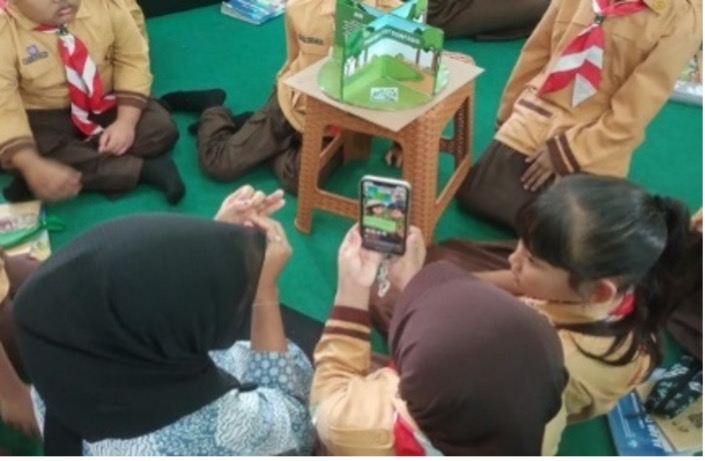
This study investigated the effect of AR-based diorama-assisted project-based learning on fourth-grade students’ understanding of photosynthesis and learning outcomes at Kalibanteng Kidul 01 Elementary School. A quasi-experimental non-equivalent control group design was employed, involving 60 Grade 4 students divided into an experimental group and a control group. The experimental group received instruction through project-based learning supported by an AR-based photosynthesis diorama, while the control group was taught using conventional instructional methods. Data were collected through pretests and posttests and analysed using normality and homogeneity tests, independent-samples t-tests, and N-Gain analysis. The results showed that the data met the assumptions of normality and homogeneity. The independent samples t-test indicated a statistically significant difference in posttest learning outcomes between the experimental and control groups (t = −5.088, p < 0.05). In addition, the experimental group achieved a higher mean posttest score and a higher N-Gain value than the control group. These findings demonstrated that AR-based diorama-assisted project- based learning was more effective than conventional instruction in improving students’ understanding of photosynthesis and learning outcomes.
Downloads
Alfitriani, N., Maula, W. A., & Hadiapurwa, A. (2021). The use of augmented reality media in learningto identify landform features. Jurnal Penelitian Pendidikan, 38(1), 30–38. DOI: https://doi.org/10.15294/jpp.v38i1.30698
Apriani, D., Fatmawati, R. A., & Al Farisi, S. (2025). The development of diorama learning media on the photosynthesis process for Grade IV students. Jurnal Edukasi, 3(1), 1–16. DOI: https://doi.org/10.60132/edu.v3i1.365
Astuti, M., Ismail, F., Fatimah, S., Puspita, W., & Herlina, H. (2024). The relevance of the Merdeka Curriculum in improving the quality of Islamic education in Indonesia. International Journal of Learning, Teaching and Educational Research, 23(6), 56–72. DOI: https://doi.org/10.26803/ijlter.23.6.3
Asytri, W., Trisiana, A., & Mustofa, M. (2023). The effect of the project-based learning (PjBL) model on the learning outcomes of Grade IV students in IPAS at SD N Madyotaman Surakarta in the 2022/2023 academic year. Jurnal Pendidikan Tambusai, 7(3), 20401–20409. DOI: https://doi.org/10.31004/jptam.v7i3.9494
Biazus, M. de O., & Mahtari, S. (2022). The impact of project-based learning (PjBL) model on secondary students’ creative thinking skills. International Journal of Essential Competencies in Education, 1(1), 38–48. DOI: https://doi.org/10.36312/ijece.v1i1.752
Budiarto, M. K., Asrowi, Gunarhadi, Sunardi, & Rahman, A. (2025). Effect of ICT-based learning media on student learning outcomes: A scoping review. Journal of Learning for Development, 12(2), 347–363. DOI: https://doi.org/10.56059/jl4d.v12i2.1354
Bulkani, B., Riadin, A., Ni’mah, N., & Setiawan, M. A. (2025). Impact of holistic learning models on character development: A systematic review. The Education and Science Journal, 27(5), 111– 141. DOI: https://doi.org/10.17853/1994-5639-2025-5-111-141
Dennick, R. (2016). Constructivism: Reflections on twenty five years teaching the constructivist approach in medical education. International Journal of Medical Education, 7, 200–205. DOI: https://doi.org/10.5116/ijme.5763.de11
Dewi, M. R. (2022). The strengths and limitations of project-based learning for strengthening the Pancasila Student Profile in the Merdeka Curriculum. Inovasi Kurikulum, 19(2), 213–226. DOI: https://doi.org/10.17509/jik.v19i2.44226
Efendi, P. M., Muhtar, T., & Herlambang, Y. T. (2023). The relevance of the Merdeka Curriculum to the educational conception of Ki Hadjar Dewantara: A critical study from a philosophical and pedagogical perspective. Jurnal Elementaria Edukasia, 6(2), 548–561. DOI: https://doi.org/10.31949/jee.v6i2.5487
Fahrezi, I., Taufiq, M., Akhwani, A., & Nafia’ah, N. (2020). A meta-analysis of the effects of the project-based learning model on students’ learning outcomes in elementary school science subjects. Jurnal Ilmiah Pendidikan Profesi Guru, 3(3), 408–417. DOI: https://doi.org/10.23887/jippg.v3i3.28081
Guo, P., Saab, N., Post, L. S., & Admiraal, W. (2020). A review of project-based learning in higher education: Student outcomes and measures. International Journal of Educational Research, 102. DOI: https://doi.org/10.1016/j.ijer.2020.101586
Hunaepi, H., Sudiatmika, A. A. I. A. R., & Fadly, W. (2023). Augmented reality in education: A meta- analysis of (quasi-) experimental studies to investigate the impact. Reflection Journal, 3(2), 74– 87. DOI: https://doi.org/10.36312/rj.v3i2.1831
Irmade, O., Widjanarko, P., & Andaryani, E. T. (2022). Augmented reality as early childhood learningmedia: Environment theme. Edukasi, 16(1), 12–19. DOI: https://doi.org/10.15294/edukasi.v16i1.36655
Krass, I. (2016). Quasi experimental designs in pharmacist intervention research. International Journal of Clinical Pharmacy, 38(3), 647–654. DOI: https://doi.org/10.1007/s11096-016-0256-y
Krishnan, P. (2019). A review of the non-equivalent control group post-test-only design. Nurse Researcher, 26(2), 37–40. DOI: https://doi.org/10.7748/nr.2018.e1582
Kristanto, A. (2016). Learning Media. Bintang Surabaya.
Kumari, G. (2022). Constructivism in learning. Educational Quest- An International Journal of Education and Applied Social Sciences, 13(3). DOI: https://doi.org/10.30954/2230- 7311.3.2022.5
Maharani, M. D., & Nurharini, A. (2024). The relationship between the use of TikTok and PjBL models with music learning outcomes. Jurnal Prima Edukasia, 12(2), 272–283. DOI: https://doi.org/10.21831/jpe.v12i2.74246
Marsden, E., & Torgerson, C. J. (2012). Single group, pre- and posttest research designs: Some methodological concerns. Oxford Review of Education, 38(5), 583–616. DOI: https://doi.org/10.1080/03054985.2012.731208
Maulidia, N. F., & Istiqomah, A. D. (2023). Project-based learning–based social studies instructional design at the elementary school (SD/MI) level. Jurnal Ilmu Pendidikan Sosial, 15(2), 295–305. DOI: https://doi.org/10.37304/jpips.v15i2.11975
Muliawati, S., Wahyuningsih, D., & Khasanah, A. N. (2023). Effect of PjBL model of diorama project making on student’s creative thinking ability and curiosity on the matter of biodiversity. Journal of Biology Learning, 5(2), 71–76. DOI: https://doi.org/10.32585/jbl.v5i2.5730
Mustadi, A., Wibowo, S. E., Zubaidah, E., Supartinah, S., Sugiarsih, S., & Sayekti, O. M. (2024). Needs analysis of project-based teaching module development in the independent curriculum. Jurnal Prima Edukasia, 12(1), 52–60. DOI: https://doi.org/10.21831/jpe.v12i1.66933
Nawangsari, N. S., Pujiastuti, P., & Gularso, D. (2022). The effect of project-based learning model on PGSD students’ critical thinking skill. Jurnal Prima Edukasia, 10(1), 19–27. DOI: https://doi.org/10.21831/jpe.v10i1.41565
Nisa, A. W., & Andaryani, E. T. (2023). The role and benefits of the Merdeka Curriculum in improving the quality of learning at the elementary school level. Simpati, 1(4), 34–42. DOI: https://doi.org/10.59024/simpati.v1i4.441
Pangestu, K., Malagola, Y., Robbaniyah, I., & Rahajeng, D. (2024). The effect of project-based learning on learning outcomes, creativity, and student motivation in science learning at elementary schools. Jurnal Prima Edukasia, 12(2), 194–203. DOI: https://doi.org/10.21831/jpe.v12i2.63208
Pebriani, C. (2017). The effect of using video media on motivation and cognitive learning outcomes in Grade V science learning. Jurnal Prima Edukasia, 5(1), 11–21. DOI: https://doi.org/10.21831/jpe.v5i1.8461
Pratiwi, N. (2021). The effect of PjBL model on PGSD students’ ability in conducting research in natural science. Jurnal Prima Edukasia, 9(2). DOI: https://doi.org/10.21831/jpe.v9i2.33695
Rahmawati, A. N., Rosanawati, I. M. R., & Sadino. (2024). The implementation of the project-based learning (PjBL) model to improve student engagement and learning outcomes in mathematicslearning. Edudikara: Jurnal Pendidikan Dan Pembelajaran, 9(2), 45–53. DOI: https://doi.org/10.32585/edudikara.v9i2.359
Rahmawati, A. P., & Andaryani, E. T. (2025). The development of the “Rama Jaka” interactive multimedia to improve students’ learning motivation in Grade V science instruction. JIIP: Jurnal Ilmiah Ilmu Pendidikan, 8(5), 5406–5415. DOI: https://doi.org/10.54371/jiip.v8i5.7963
Rehman, N., Huang, X., Mahmood, A., AlGerafi, M. A. M., & Javed, S. (2024). Project-based learning as a catalyst for 21st-Century skills and student engagement in the math classroom. Heliyon, 10(23), e39988. DOI: https://doi.org/10.1016/j.heliyon.2024.e39988
Rizqi, N. N. M., Supriyanto, T., Astuti, T., Ratnaningrum, I., & Andaryani, E. T. (2023). The effect of implementation of the Merdeka Curriculum and learning motivation on IPAS learning outcomes of fourth grade elementary students in Gugus Pangeran Diponegoro, Pagerbarang District, Tegal Regency. Journal of Elementary Education, 5(2), 111–121. https://journal.unnes.ac.id/sju/jee/article/view/77625
Rukmi, D. A., Nisa, A. F., & Zulfiati, H. M. (2025). Innovation of a project module based on the Ajak Temani Mandiri learning model integrated with local wisdom to improve the creative dimension of elementary school students. Jurnal Prima Edukasia, 13(1), 181–190. DOI: https://doi.org/10.21831/jpe.v13i1.78206
Saadiyah, L. I., & Anjarwati, A. (2022). The project-based learning (PjBL) model with augmented reality (AR) to enhance the creativity of digital native students. PASCAL (Journal of Physics and Science Learning), 6(2), 85–92. DOI: https://doi.org/10.30743/pascal.v6i2.6319
Salaman, Widyastuti, A., Syawaludin, Astuti, R. N., Iwan, Simarmata, J., Simarmata, E. J., Suleman, Y. N., Lotulung, C., & Arief, M. H. (2023). Innovative Learning Models. Yayasan Kita Menulis.
Saputri, R. P., Yulastri, A., Ganefri, Giatman, M., Irfan, D., & Effendi, H. (2025). Impact of interactive media utilisation on enhancing learning outcomes: Meta-analysis. Jurnal Penelitian Pendidikan IPA, 11(3), 40–49. DOI: https://doi.org/10.29303/jppipa.v11i3.10438
Satria, T. G., Sapriya, S., Sa’ud, U. S., Riyana, C., Hajani, T. J., & Erander, S. (2025). The effect of project based learning model on learning outcome and student’s critical thinking. Jurnal Prima Edukasia, 13(1), 146–158. DOI: https://doi.org/10.21831/jpe.v13i1.72446
Sinambela, P. N. J., Bulan, A., Nora, A. F., Susilowaty, N., Fathurrochman, M., Sembiring, E. T. B., Novianti, W., Chairunnisa, Subroto, D. E., & Mardhiyana, D. (2022). Learning Models. Sada Kurnia Pustaka.
Sørlie, M.-A., & Ogden, T. (2014). Reducing threats to validity by design in a nonrandomised experiment of a school-wide prevention model. International Journal of School & Educational Psychology, 2(4), 235–246. DOI: https://doi.org/10.1080/21683603.2014.881309
Stratton, S. J. (2019). Quasi-experimental design (pretest and posttest studies) in prehospital and disaster research. Prehospital and Disaster Medicine, 34(6), 573–574. DOI: https://doi.org/10.1017/S1049023X19005053
Sugiyono. (2016). Educational Research Methods: Quantitative, Qualitative, and R&D Approaches. Alfabeta.
Sukarno, S., & Jinabe, M. (2024). The needs of English for elementary school students: From family to school. Jurnal Prima Edukasia, 12(1), 83–98. DOI: https://doi.org/10.21831/jpe.v12i1.67841
Suryani, L., Nugroho, I. A., Wibowo, S. E., & Haliem, T. D. (2025). ESD and critical thinking in scienceand social studies learning for Grade IV elementary school. Jurnal Prima Edukasia, 13(3), 469– 482. DOI: https://doi.org/10.21831/jpe.v13i3.86222
Syahrir, S., Pujiriyanto, P., Musdalifa, M., & Fitri, S. (2024). The implementation of Merdeka curriculum to realise Indonesia golden generation: A systematic literature review. AL-ISHLAH: Jurnal Pendidikan, 16(2). DOI: https://doi.org/10.35445/alishlah.v16i2.4872
Wahyuningsih, E., Zulfiati, H. M., & Hasanah, D. (2024). The effectiveness of using augmented reality media in Grade VI science learning on critical thinking skills and learning outcomes in the solar system topic. Pendas: Jurnal Ilmiah Pendidikan Dasar, 9(4), 33–42. DOI: https://doi.org/10.23969/jp.v9i4.16771
Wahyuningtyas, B. P., Asteria, D., & Sunarto. (2023). The accommodation of communication in the family as an adjustment of cultural values between generations. Social Sciences, 12(12). DOI: https://doi.org/10.3390/socsci12120653
Wang, C., Song, L., & Jiang, J. (2025). The impact of project-based learning on university physics education: Enhancing cognitive skills and core competencies. Frontiers in Psychology, 16. DOI: https://doi.org/10.3389/fpsyg.2025.1495105
Whitney, J. D. (2000). Quasi-experimental designs. Journal of WOCN, 27(4), 107816. DOI: https://doi.org/10.1067/mjw.2000.107816
Wijaya, L. K. L., & Purwati, P. D. (2024). The implementation of project-based learning (PjBL) assisted by augmented reality comics on the solar system topic using a differentiated learning approach. Didaktik: Jurnal Ilmiah PGSD STKIP Subang, 10(2), 391–398. DOI: https://doi.org/10.36989/didaktik.v10i2.4042
Wingkolatin, Ghifari, R. Z. A., & Cahayani, A. N. F. W. (2024). The project-based learning (PjBL) instructional model to improve civic intelligence of Grade XII students at SMA Negeri 10 Samarinda. Jurnal Koulutus: Jurnal Pendidikan Kahuripan, 7(1), 85–93. DOI: https://doi.org/10.51158/koulutus.v7i1.1127
Wulansari, D., & Tyas, D. N. (2025). The development of interactive picture card media with QR code to improve IPAS learning outcomes. Jurnal Prima Edukasia, 13(2), 213–224. DOI: https://doi.org/10.21831/jpe.v13i2.84474
Yuni, Y., Kusuma, A. P., & Huda, N. (2021). Problem-based learning in mathematics learning to improve reflective thinking skills and self-regulated learning. Al-Jabar: Jurnal Pendidikan Matematika, 12(2), 467–480. DOI: https://doi.org/10.24042/ajpm.v12i2.10847
Yusri, R., Yusof, A. M., & Sharina, A. (2024). A systematic literature review of project-based learning: Research trends, methods, elements, and frameworks. International Journal of Evaluation and Research in Education, 13(5), 3345–3359. DOI: https://doi.org/10.11591/ijere.v13i5.27875
Zainatunnisa, F., Wijayanti, A., & Nuvitalia, D. (2025). The effectiveness of the differentiated project- based learning (PjBL) model on IPAS learning outcomes of fourth-grade students at SDN Raci, Batangan, Pati. Jurnal Wawasan Pendidikan, 5(1), 237–249. DOI: https://doi.org/10.26877/jwp.v5i1.19773
Zhang, L., & Ma, Y. (2023). A study of the impact of project-based learning on student learning effects: A meta-analysis study. Frontiers in Psychology, 14. DOI: https://doi.org/10.3389/fpsyg.2023.1202728
Copyright (c) 2026 Desi Indah Herowati, Eka Titi Andaryani

This work is licensed under a Creative Commons Attribution-ShareAlike 4.0 International License.
The copyright of the received article shall be assigned to the journal as the publisher of the journal. The intended copyright includes the right to publish the article in various forms (including reprints). The journal maintains the publishing rights to the published articles.

Jurnal Prima Edukasia by http://journal.uny.ac.id/index.php/jpe/index is licensed under a Creative Commons Attribution-ShareAlike 4.0 International License.