Miniature micro hydro power center to improve critical thinking skills for elementary school students
Downloads
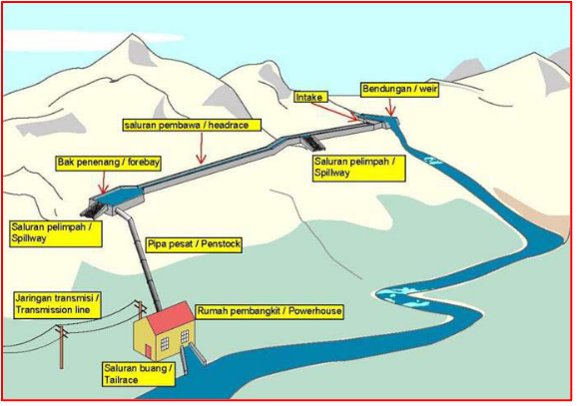
The Miniature Micro Hydro Power Center (MHPC) is a learning media development designed to improve critical thinking skills in elementary science education. The operation of this miniature resembles that of the actual MHPC Karekan, located in Banjarnegara, Indonesia. This study aimed to develop the MHPC Miniature media, evaluate its validity, and test its effectiveness in enhancing students' critical thinking skills. This research employed the Research and Development (R&D) method, using the ADDIE (Analysis, Design, Development, Implementation, and Evaluation) model. The research stages included an assessment of teacher and student needs, followed by product validation by material experts (one science lecturer and five experienced teachers), technicians, and nine practitioners. To test its effectiveness, 102 fifth-grade students from the Ki Hajar Dewantara Cluster in North Purwokerto District were selected as the research sample. The sample was divided into an experimental and a control group using a cluster sampling technique. Data from the posttest were analysed for normality and homogeneity before an Independent-Samples T-Test. The results indicated that validation by science experts and practitioners yielded a Content Validity Index (CVI) of > 0.85, indicating the media is highly suitable for learning. Furthermore, the Independent Samples T-test showed that the experimental group using the MHPC miniature performed significantly better than the control group, which used only video-based media (ρ < 0.05). In conclusion, the developed MHPC miniature is a valid and effective tool for fostering critical thinking skills in elementary science learning. These findings imply that integrating contextualized miniatures into the science curriculum can bridge the gap between abstract concepts and real-world applications, providing a scalable model for innovative STEM education.
Downloads
Alsaleh, N. J. (2020). Teaching critical thinking skills: Literature review. The Turkish Online Journal of Educational Technology, 19, 21–39. http://files.eric.ed.gov/fulltext/EJ1239945.pdf
Álvarez-Huerta, P., Muela, A., & Larrea, I. (2022). Disposition toward critical thinking and creative confidence beliefs in higher education students: The mediating role of openness to diversity and challenge. Thinking Skills and Creativity, 43. DOI: https://doi.org/10.1016/j.tsc.2022.101003
Ambarita, C. F., Sirait, D. E., & Ambarita, P. (2022). The effectiveness of developing interactive learning media on learning basic concept material. International Journal of Computer Applications Technology and Research, 11(12), 413–415. DOI: https://doi.org/10.7753/ijcatr1112.1004
Anggito, A., & Sartono, E. K. E. (2022). The development of multicultural education comics to embed tolerance character for 4th grade of elementary school. Jurnal Prima Edukasia, 10(1), 66–81. DOI: https://doi.org/10.21831/jpe.v10i1.40504
Artobatama, I., Hastuti, W. S., Zubaidah, E., & Wibowo, S. E. (2023). STEM learning design with literation-based pop-up book media in elementary schools. Jurnal Prima Edukasia, 11(2), 152– 160. DOI: https://doi.org/10.21831/jpe.v11i2.56628
Atma, B. A., Azahra, F. F., & Mustadi, A. (2021). Teaching style, learning motivation, and learning achievement: Do they have significant and positive relationships? Jurnal Prima Edukasia, 9(1), 23–31. DOI: https://doi.org/10.21831/jpe.v9i1.33770
Dewi, R. P., & Tyas, D. N. (2025). The development of PBL-based water cycle diorama media to improve grade V learning outcomes. Jurnal Prima Edukasia, 13(2), 256–272. DOI: https://doi.org/10.21831/jpe.v13i2.83639
Earl, L., & Katz, S. (2006). Rethinking Classroom Assessment with Purpose in Mind. Province of Manitoba. https://www.edu.gov.mb.ca/k12/assess/wncp/full_doc.pdf
Ennis, R. H. (1996). Critical thinking dispositions: Their nature and assessability. Informal Logic, 18(2), 165–182. DOI: https://doi.org/10.22329/il.v18i2.2378
Fajari, L. E. W., Sarwanto, & Chumdari. (2020). Student critical thinking skills and learning motivation in elementary students. Journal of Physics: Conference Series, 1440(1). DOI: https://doi.org/10.1088/1742-6596/1440/1/012104
Fatmawati, A., Zubaidah, S., Mahanal, S., & Sutopo. (2019). Critical thinking, creative thinking, and learning achievement: How they are related. Journal of Physics: Conference Series, 1417(1). DOI: https://doi.org/10.1088/1742-6596/1417/1/012070
Friedman, A., & Schneider, E. (2018). Developing a visualization education curriculum in the age of big data using the Dick and Carey model. Visual Communication Quarterly, 25(4), 250–256. DOI: https://doi.org/10.1080/15551393.2018.1530115
Gunawan, G., Suhardi, S., & Makawawa, J. C. (2023). Developing picture storybook learning media in terms of students’ critical and creative thinking skills. Jurnal Prima Edukasia, 11(2), 161–175. DOI: https://doi.org/10.21831/jpe.v11i2.56795
Hanifah, C. S., & Setyasto, N. (2024). 3D diorama learning media on the history of the independence of Indonesia to improve learning outcomes in social studies learning. MIMBAR PGSD Undiksha, 12(1), 47–56. DOI: https://doi.org/10.23887/jjpgsd.v12i1.72828
Hasanah, U., Astra, I. M., & Sumantri, M. S. (2023). Exploring the need for using science learning multimedia to improve critical thinking elementary school students: Teacher perception. International Journal of Instruction, 16(1), 417–440. DOI: https://doi.org/10.29333/iji.2023.16123a
Heruprahoro, T., Anggoro, S., & Purwandari, R. D. (2023). Designing material learning for 5th grade elementary school using Science, Technology, Engineering, and Mathematics (STEM). Proceedings Series on Social Sciences & Humanities, 12, 445–452. DOI: https://doi.org/10.30595/pssh.v12i.832
Hsu, F. H., Lin, I. H., Yeh, H. C., & Chen, N. S. (2022). Effect of Socratic reflection prompts via video- based learning system on elementary school students’ critical thinking skills. Computers and Education, 183, 104497. DOI: https://doi.org/10.1016/j.compedu.2022.104497
Ikhsan, J., Sugiyarto, K., & Astuti, T. (2020). Fostering student’s critical thinking through a virtual reality laboratory. International Journal of Interactive Mobile Technologies, 14(08). DOI: https://doi.org/10.3991/ijim.v14i08.13069
Jais, N. F. M., Ishak, S. A., & Yunus, M. M. (2022). Developing the self-learning interactive module using ADDIE model for Year 5 primary school students. International Journal of Academic Research in Progressive Education and Development, 11(1), 615–630. DOI: https://doi.org/10.6007/ijarped/v11-i1/11919
Kwangmuang, P., Jarutkamolpong, S., Duangngern, P., Gessala, N., & Sarakan, P. (2024). Promoting analytical thinking skills development in elementary school students through animated cartoons. Computers in Human Behavior Reports, 15, 100467. DOI: https://doi.org/10.1016/j.chbr.2024.100467
Lathifah, H. (2024). Feasibility of PLTB miniature learning media on the material on how to get electrical energy at SDN Diwek 1 Jombang. EduCurio, 2(3), 457–466. DOI: https://doi.org/10.71456/ecu.v2i3.880
Lau, J. Y. F. (2011). An Introduction to Critical Thinking and Creativity: Think More, Think Better. John Wiley and Sons. DOI: https://doi.org/10.1002/9781118033449
Liang, R., Al-Huqail, A. A., Elhosiny Ali, H., Ponnore, J. J., Alkhalifah, T., Alturise, F., & Assilzadeh, H. (2023). Wireless water consumption sensing system for building energy efficiency: A visual- based approach with self-powered operation. Energy and Buildings, 301, 113584. DOI: https://doi.org/10.1016/j.enbuild.2023.113584
Ma, Y. (2023). Exploration of flipped classroom approach to enhance critical thinking skills. Heliyon, 9(11), e20895. DOI: https://doi.org/10.1016/j.heliyon.2023.e20895
Mardiyanto, I. R., Raharjo, J., Utami, S., Mursanto, W. B., & Rahardjo, A. H. (2023). An improvementin power quality and by-product of the run-off river micro hydro power plant. Energy Engineering, 120(6), 1295–1305. DOI: https://doi.org/10.32604/ee.2023.027756
Melinda, W., & Ariyani, Y. D. (2024). Development of diorama based learning media to improve elementary school students’ creative thinking ability. Indonesian Journal of Classroom Action Research, 2(20), 5–9. DOI: https://doi.org/10.53866/ijcar.v1i2.310
Miskat, M. I., Ahmed, A., Rahman, M. S., Chowdhury, H., Chowdhury, T., Chowdhury, P., Sait, S. M., & Park, Y. K. (2021). An overview of the hydropower production potential in Bangladesh to meet the energy requirements. Environmental Engineering Research, 26(6). DOI: https://doi.org/10.4491/eer.2020.514
Muliyati, D. (2024). Designing educational games for teaching hydro-electric power stations in elementary school curriculum. Current STEAM and Education Research, 2(1), 35–42. DOI: https://doi.org/10.58797/cser.020103
Nasution, N. S., & Anas, N. (2024). Development of water cycle diorama media to improve students’ critical thinking ability. Scaffolding: Jurnal Pendidikan Islam dan Multikulturalisme, 6(2), 58– 72. DOI: https://doi.org/10.37680/scaffolding.v6i2.5204
Nurul A., Sintayana, M., & Syafruddin, M. (2024). The effects of CTL and PjBL models assisted by diorama media on students’ creative thinking abilities. MIMBAR PGSD Undiksha, 12(3), 472– 481. DOI: https://doi.org/10.23887/jjpgsd.v12i3.76468
OECD. (2024). Pisa 2022. Perfiles Educativos, 46(183). DOI: https://doi.org/10.22201/iisue.24486167e.2024.183.61714
Peng, W., Jiang, Z., Yao, H., Zhang, L., & Yu, J. (2025). Short-term hydropower generation prediction model for run-of-river hydropower plants considering hydrometeorological factors. Renewable Energy, 254. DOI: https://doi.org/10.1016/j.renene.2025.123790
Polit, D. F., & Beck, C. T. (2006). The content validity index: Are you sure you know what’s being reported? Critique and recommendations. Research in Nursing & Health, 29(5), 489–497. DOI: https://doi.org/10.1002/nur.20147
Rudin, B. R., Raharjo, T. J., & Utomo, K. B. (2021). The effect of project-based learning making dioramas from inorganic wastes on elementary school to enhance student’s conceptual understanding and creativity. Journal of Primary Education, 10(3), 297–307. DOI: https://doi.org/10.15294/jpe.v10i3.49927
Stiggins, R. J. (1994). Classroom Assessment for Student Success. National Education Association. https://files.eric.ed.gov/fulltext/ED429990.pdf
Syarifuddin, S. (2018). The effect of using the scientific approach through concept understanding and critical thinking in science. Jurnal Prima Edukasia, 6(1), 21–31. DOI: https://doi.org/10.21831/jpe.v6i1.13333
Sylvia Dewi, P., Cahya Prima, E., Widodo, A., & Rochintaniawati, D. (2023). Inquiry ability of students to develop cognitive ability in learning hydrostatic pressure. Research in Physics Education, 2(2), 138–153. DOI: https://doi.org/10.31980/ripe.v2i2.75
Wynd, C. A., Schmidt, B., & Schaefer, M. A. (2003). Two quantitative approaches for estimating content validity. Western Journal of Nursing Research, 25(5), 508–518. DOI: https://doi.org/10.1177/0193945903252998
Yonanda, D. A., Yuliati, Y., & Saputra, D. S. (2019). Development of problem-based comic book as learning media for improving primary school students’ critical thinking ability. Mimbar Sekolah Dasar, 6(3), 341–348. DOI: https://doi.org/10.17509/mimbar-sd.v6i3.22892
Copyright (c) 2026 Jurnal Prima Edukasia

This work is licensed under a Creative Commons Attribution-ShareAlike 4.0 International License.
The copyright of the received article shall be assigned to the journal as the publisher of the journal. The intended copyright includes the right to publish the article in various forms (including reprints). The journal maintains the publishing rights to the published articles.

Jurnal Prima Edukasia by http://journal.uny.ac.id/index.php/jpe/index is licensed under a Creative Commons Attribution-ShareAlike 4.0 International License.